Case study · NaschNatur GmbH
The Content Engine
Output was five pieces a week and every concept took about eight rounds of back-and-forth with leadership before it could move. By the end it was fourteen a week through one round — because the brand's judgment had moved upstream into the system instead of living in the approval queue.
Context
NaschNatur makes natural-base confectionery without industrial sugar and is one of the fastest-growing young brands in German food. Twelve people. Content ran across TikTok, YouTube Shorts, Pinterest and two Instagram accounts — the established founder-led one where most of the reach lived, and a dedicated brand account we launched from zero alongside it — publishing one to two times a day.
My title was Content Creator. In practice I worked alongside the owner of the social channels — supporting her in running the operation while coordinating the work further down the content team — and my part covered the whole lifecycle rather than one slice of it: concepting, filming, editing, publishing, analysis, and creative for paid. The brand account was mine end to end.
The problem wasn't production
Five pieces a week across four channels is thin for a brand growing this fast, and the obvious read is that the team needed to produce more. It wasn't that. The cost of making something was dominated by the cost of getting it agreed: roughly eight separate rounds of back-and-forth with leadership stood between a concept and a green light.
Eight rounds is not a taste problem, it's a structure problem. It means the brand's judgment lived in people's heads at the end of the process instead of in the brief at the start of it, so every piece relitigated the same questions from scratch.
What I built
Same five stages. The difference is where the brand's judgment sits — encoded in the concept stage, instead of relitigated across eight rounds of review afterwards.
An AI-assisted content pipeline on Notion and Claude, in two halves.
Creative: continuous trend and niche analysis feeding concept generation, plus copy and voice-over scripts. The piece that moved the approval number was a custom Claude Skill built from the channel owner's own voice documents — so drafts arrived already sounding like the brand, and there was far less left to argue about.
Project management: wired into the task system, so generated concepts landed as assigned work with owners and notifications rather than as a list someone still had to process.
A second channel, built from zero
Andi's account works because it doesn't feel like advertising — which is exactly what makes it fragile. Load it with product explainers and launch posts and the persona stops being a person and starts being a storefront.
So we built a second channel with a different job. I took the strategy, the setup and the voice; a colleague produced the visual identity under my direction. Andi had no involvement, deliberately — a brand channel propped up by the founder isn't a separate channel.
It reached roughly 2,400 followers from zero with essentially no cross-posting, and was still climbing when I left. Slow, but earned rather than borrowed — and the cleaner test of the pipeline, because this channel had no momentum to coast on.
andi.naschnatur — the established account
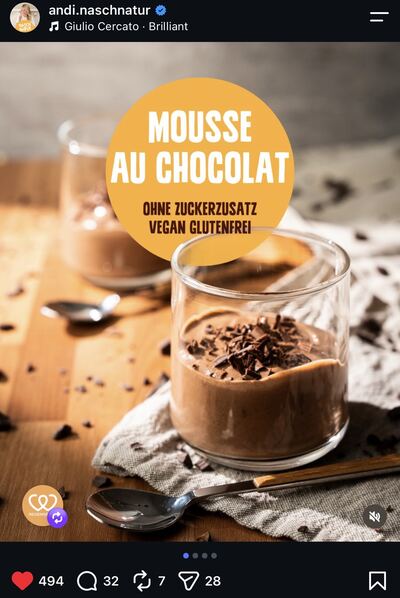
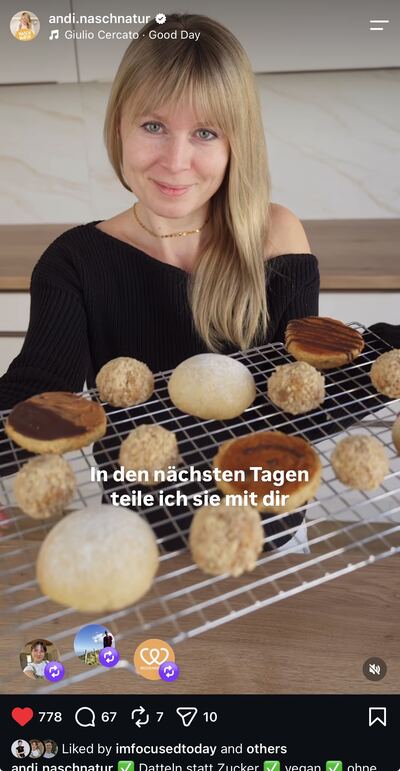
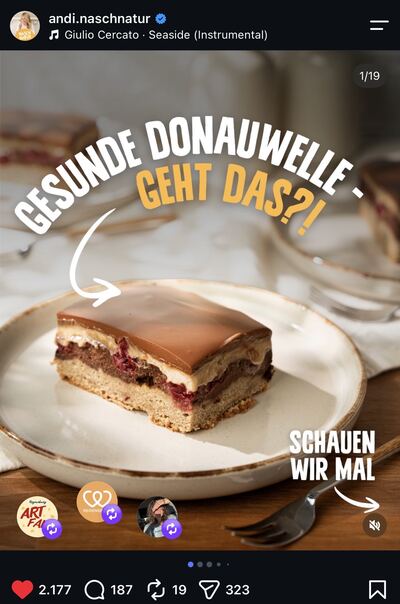
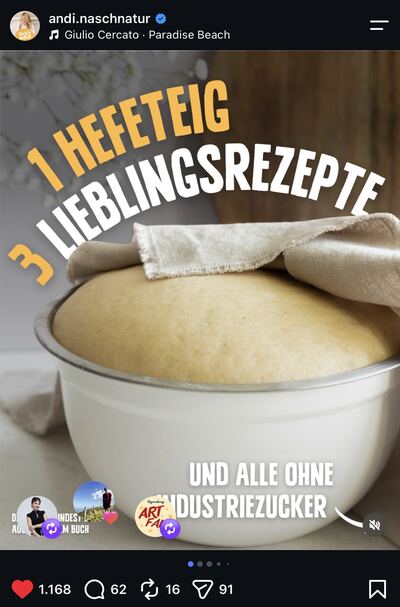
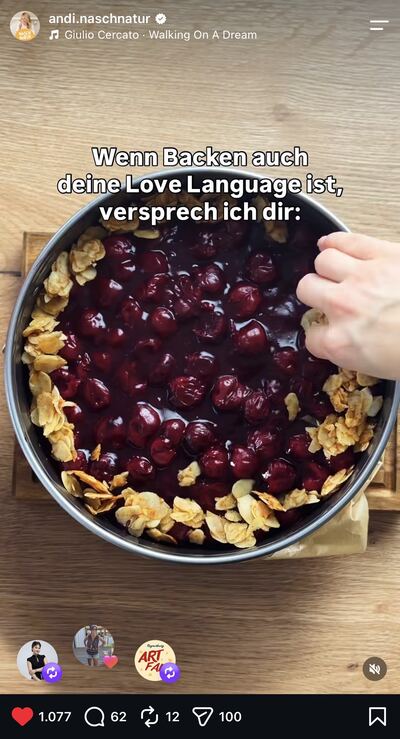
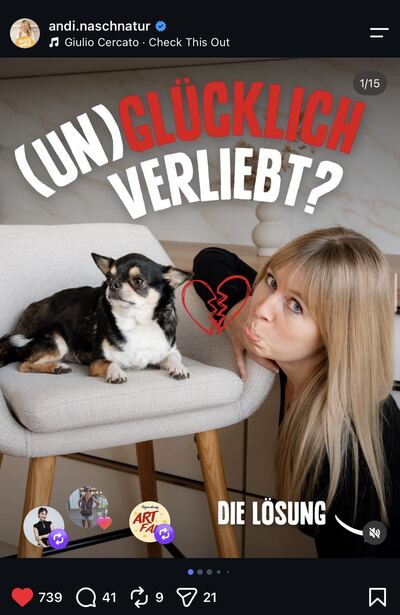
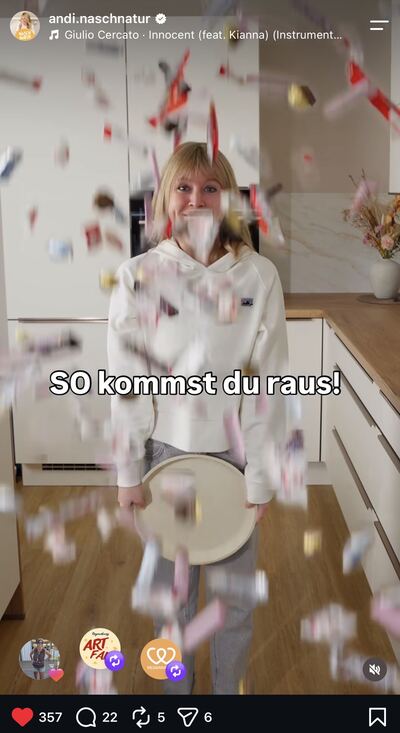
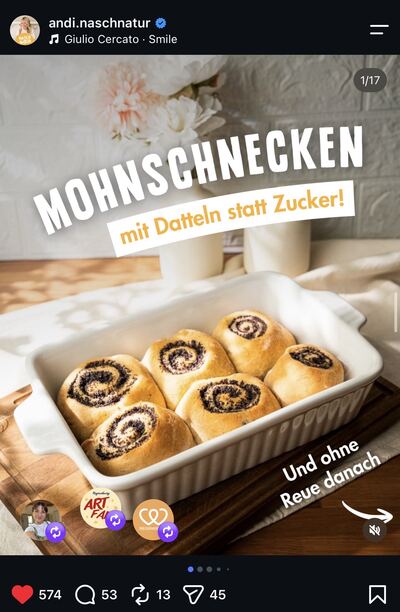
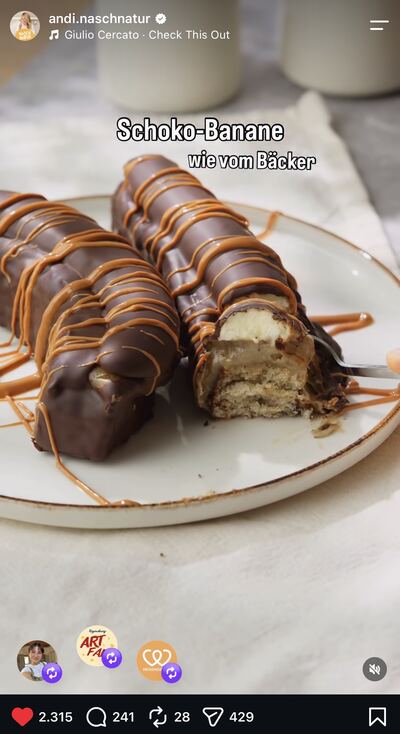
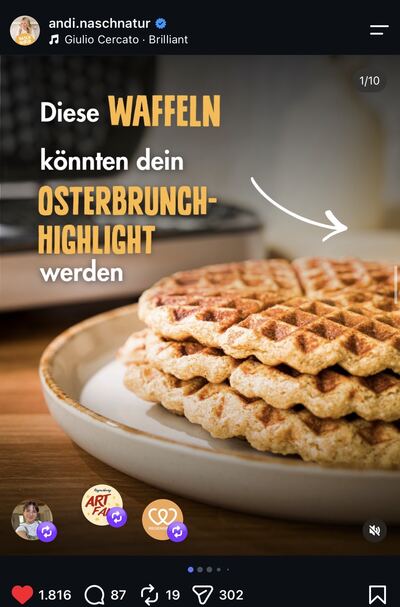
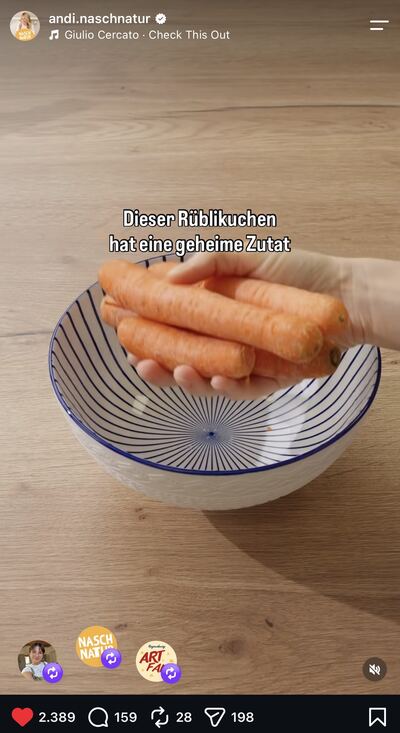
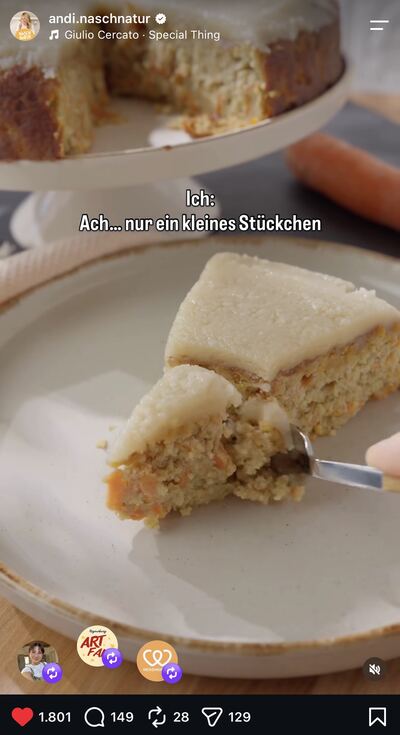
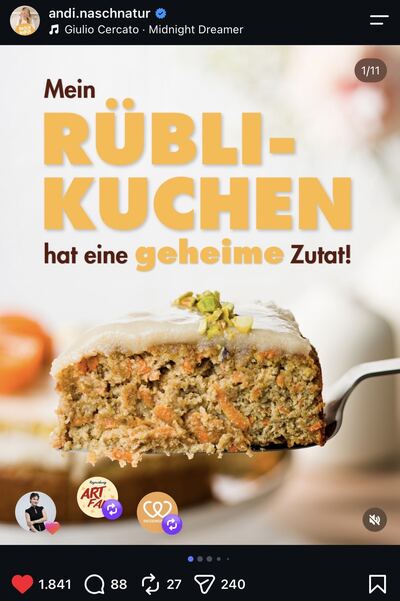
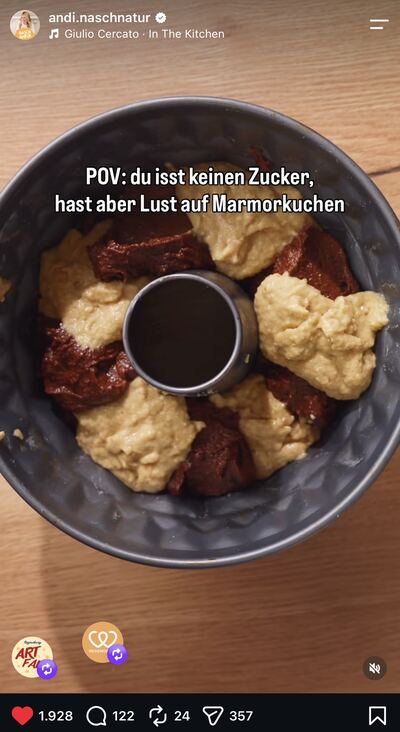
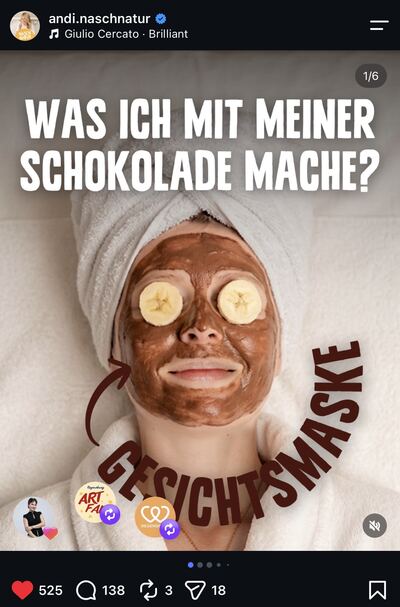
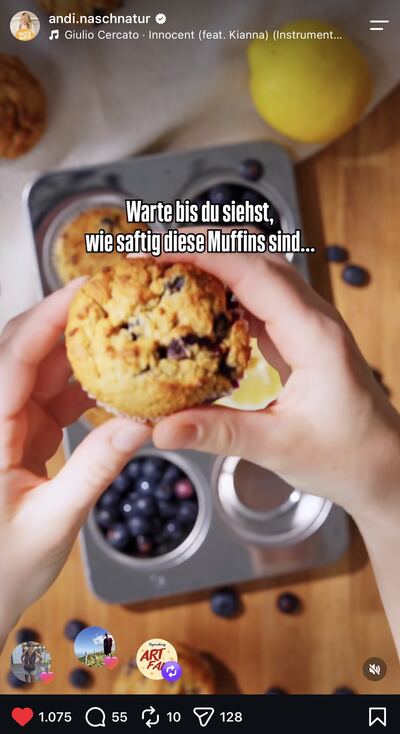
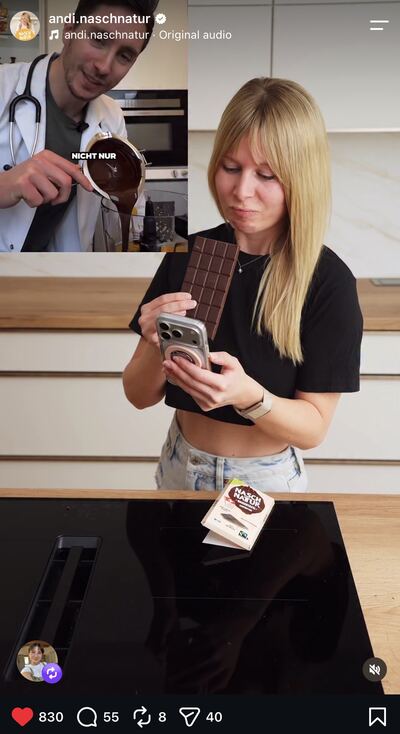
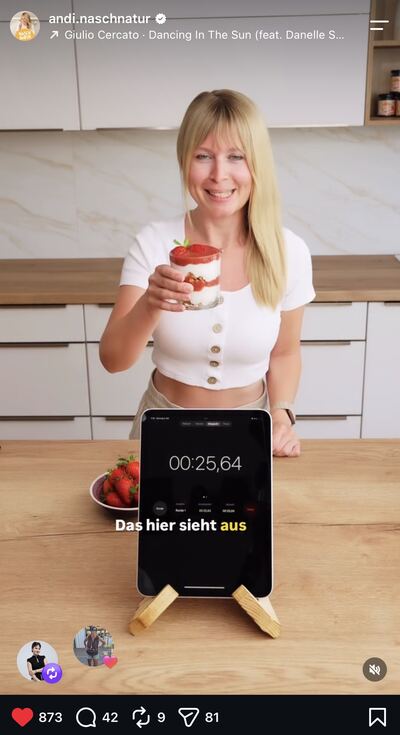
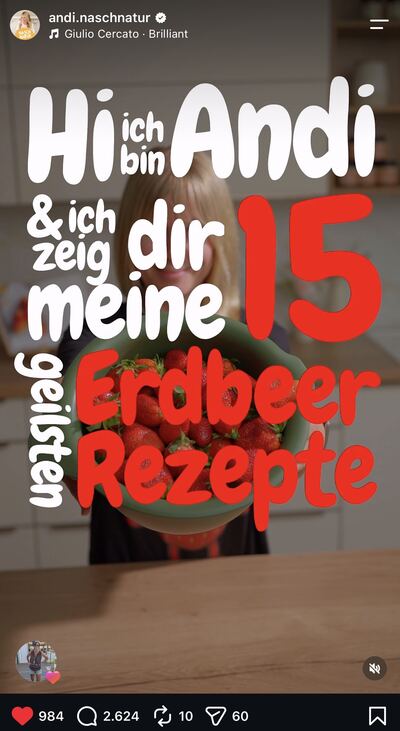
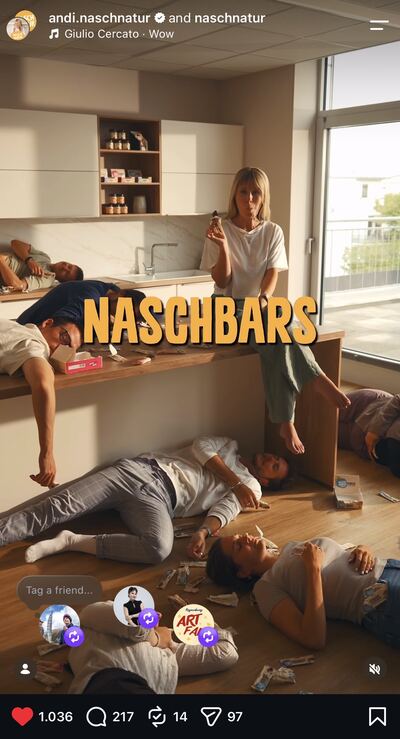
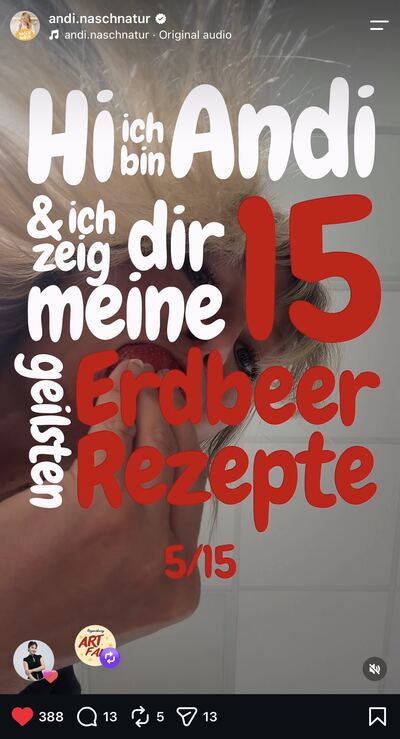
Founder-led and personality-first: recipes, process, the everyday voice the brand-voice Skill was later built from. Every thumbnail links to the live post.
naschnatur — the brand account
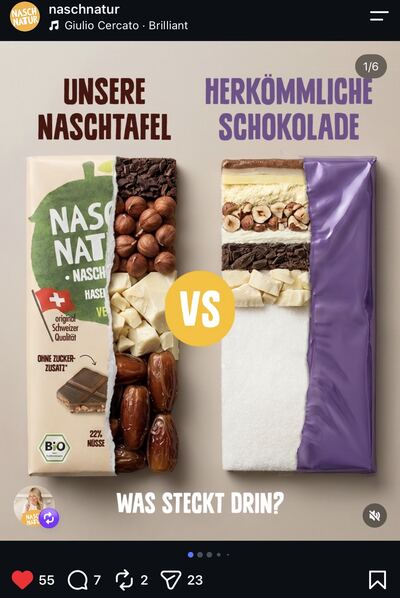
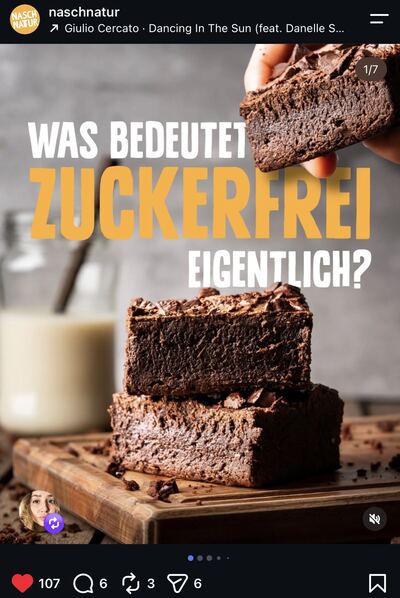
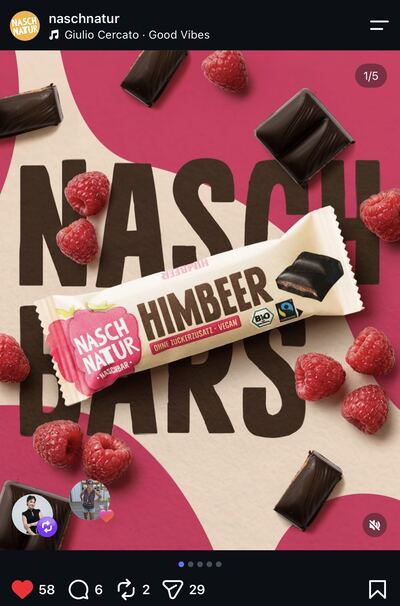
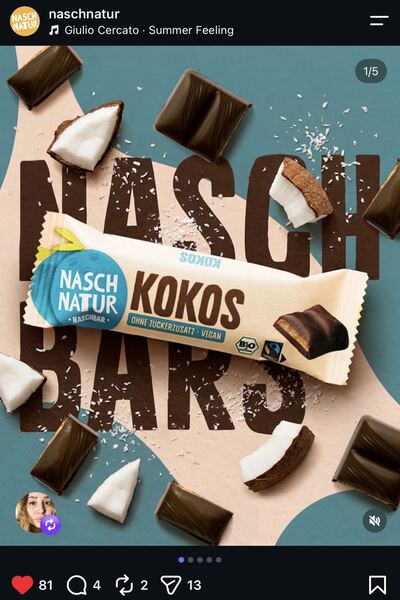
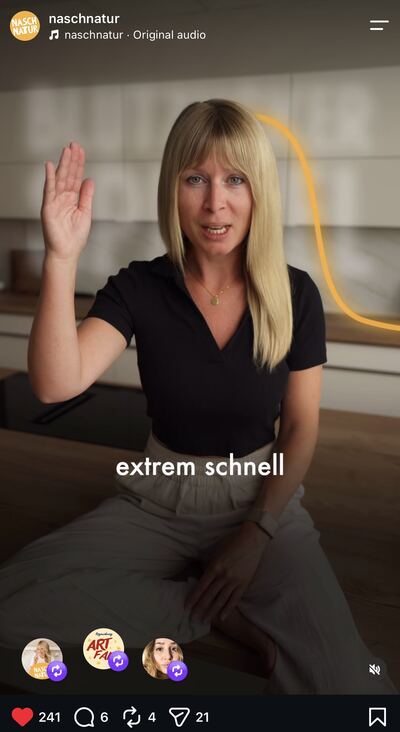
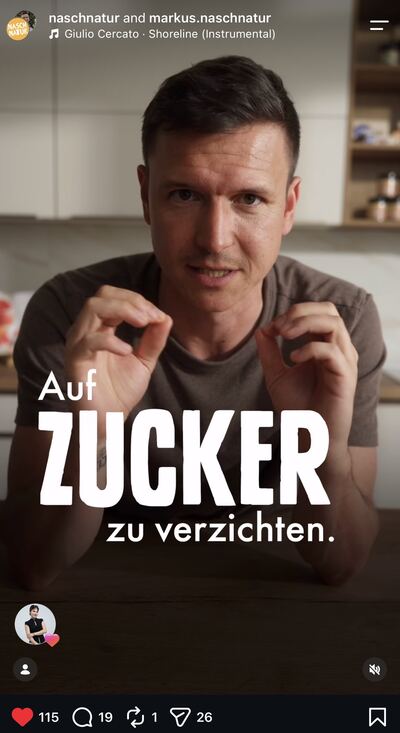
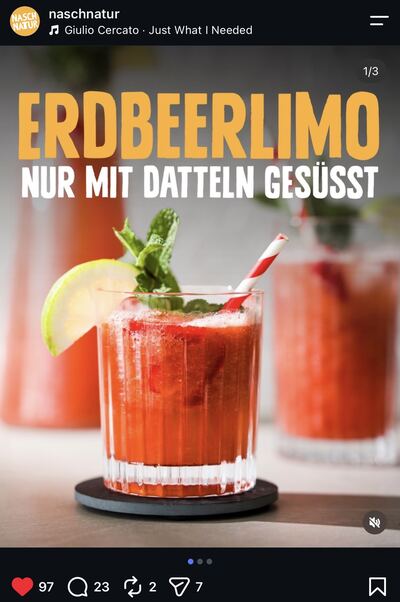
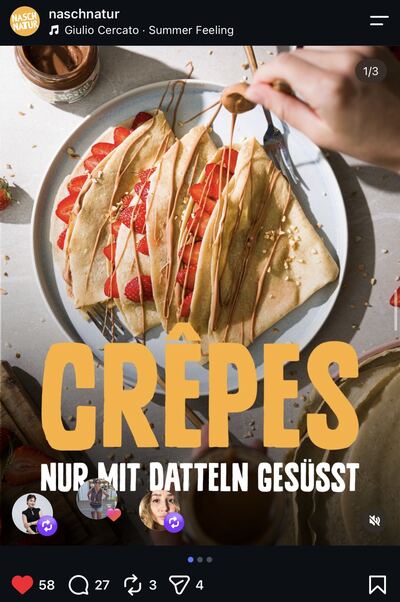
Product-led where the other is personality-led — ingredient comparisons, launch posts, the "what does sugar-free actually mean" explainers a founder account can't carry without turning into an ad. Every thumbnail links to the live post.
Creative strategy and paid
Alongside organic I moved into creative strategy for performance marketing. The process ran end to end: researching creative opportunities, developing concepts, turning those insights into actual ads, coordinating production, filming creatives myself, then reading the performance data back into the next round of concepts. In Meta Ads Manager I built campaigns, handled setup, and analysed how the resulting advertising performed.
The useful part is that the loop closed on itself. Because I was both making the creative and reading its performance, the next concept started from what the last one had actually done rather than from an opinion about it — the same principle as the organic pipeline, applied to paid.
Two honest limits: budget decisions sat with leadership, and media buying later moved to a dedicated colleague. The accurate description of my role is creative strategy, creative production, campaign management and creative performance analysis — not media buying.
Results
- 2.8×weekly output, same team — the process changed, not the workload
- 7/8of the approval burden gone, from eight rounds to one
- 8M+monthly views, recovered within two months
- 2,400followers on a second channel that started at zero
One caveat worth stating plainly: the account had previously reached around 12 million views a month. This was a recovery, not an all-time high. The efficiency numbers are the stronger claim — the reach is what they made possible.
What the job involved, hands on
- Developing content ideas, researching trends and niches, building formats for organic social
- Filming social content, producing short-form video, building carousels and graphics, some packaging design
- Video editing, image editing, preparing content for publication
- Analysing performance and feeding it back into the next creative round
- Conceiving and building a commercially planned native iOS app in Swift end to end (under NDA)
DaVinci Resolve · Premiere Pro · Photoshop · Meta Business Suite · Meta Ads Manager · Notion · Claude